

iSpeech
One of the most enlightening experiences in the Christian life is realizing that activity and fruitfulness are not the same. I used to believe that being busy for God meant that I was creating results for Him. My schedule was packed with meetings, obligations, and service, yet a doubt arose deep within me: Is this what Jesus meant by producing fruit? The solution became evident when I reflected thoroughly on Jesus' words in John 15.
“I am the vine, you are the branches… he that abides in me, and I in him, the same bring forth much fruit: for without me you can do nothing.” John15:5
Note what Jesus did not say. He did not state that the branch must fight to produce fruit. He did not specify that the branch must force fruit. The branch simply abides. That word, "abide," transformed my view of fruitful existence. Fruitfulness is not the result of deliberate effort; rather, it is the natural effect of persistent connection. A branch separated from the vine may appear to be alive for a while. Leaves may remain green for a short time. But ultimately, the reality emerges: there is no life running through it.
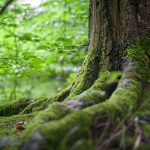
Jesus was making a significant spiritual point: the vibrancy of a believer's life stems directly from their connection with Him. Fruitful living begins with maintaining a connection to the Source. In practice, this relationship is fostered via daily communion with God—time in His Word, prayer, and sensitivity to the Holy Spirit. The psalmist expresses it beautifully: "He shall be like a tree planted by the rivers of water that bringeth forth his fruit in his season…" — Psalm 1:3 (KJV). A planted tree is not agitated. It's steady. Its roots require constant care, and fruit comes when the season is right. This is the structure of a fruitful life.
However, Jesus adds another dimension that many Christians miss: "Every branch that bears fruit, he purges it, that it may bear more fruit." — John 15:2 (KJV). Pruning is not punishment. It is preparedness. God occasionally removes distractions, bad habits, or even specific opportunities—not to limit us, but to promote our fruitfulness.Pruning is rarely a pleasant experience. It may manifest as closed doors, unexpected corrections, or periods of silent progress. However, these situations are frequently God's method of sharpening our attention. Hebrews 12:11 gives us this reminder: "Now no chastening for the present seemeth to be joyous, but grievous: nevertheless, afterward it yieldeth the peaceable fruit of righteousness…" Fruit typically grows from seasons that are first painful.
In John 15:16, Jesus goes even farther, proclaiming something powerful: "I have chosen you and ordained you, that ye should go and bring forth fruit, and that your fruit should remain." God isn't interested in temporary outcomes. He seeks long-lasting fruit—character that endures, lives that persuade others to follow Christ, and obedience that leaves a mark. This fruit appears in a variety of ways. It can be evidence of the fruit of the Spirit stated in Galatians 5:22-23—love, joy, peace, patience, kindness, goodness, faithfulness, gentleness, and self-control.
Other times it manifests itself via the influence we have on others around us—encouraging someone who was losing hope, guiding someone to the truth, or exhibiting integrity in tough situations. Fruitful life is not restricted to the pulpit or public ministry. It unfolds in regular situations. The beauty of Jesus' message in John 15 lies in its simplicity. He did not portray fruitfulness as an achievement limited for a chosen few. Instead, He presented it as a natural byproduct of living in Him. Stay in touch. Stay rooted. Maintain responsiveness. Fruit is unavoidable when a believer's life is infused with Christ. So, rather than asking, "How can I do more?" a better inquiry may be, "Am I abiding deeply?" Because when the link to Christ is strong, the proof will follow. A life rooted in the Vine will never be empty. It will be a life of fruitful living.











Recent Comments