
https://www.ispeech.org/text.to.speech
The topic here is one of the most memorable and encouraging teachings of Jesus. Found in the Synoptic Gospels, it highlights the extraordinary power of even the smallest measure of genuine faith. In this reflection, we will explore what it means to have faith like a mustard seed, examine the biblical context, and unpack its implications for our lives today.
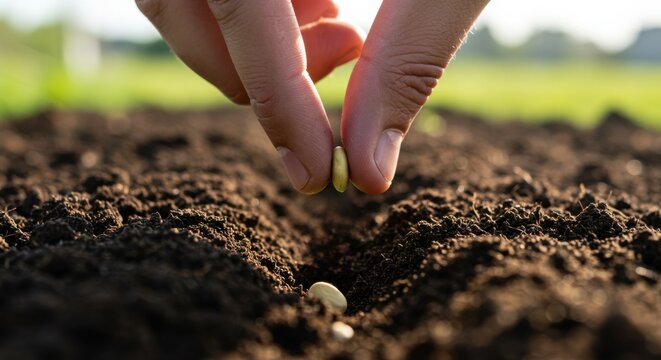
Jesus introduces the metaphor of the mustard seed in several places, but perhaps most directly in Matthew 17:20 (NKJV): “So Jesus said to them, ‘Because of your unbelief; for assuredly, I say to you, if you have faith as a mustard seed, you will say to this mountain, “Move from here to there,” and it will move; and nothing will be impossible for you.’” The mustard seed was known in ancient Palestine as one of the smallest seeds, yet it could grow into a large plant. Jesus’ point was not about the quantity of faith, but its quality and potential.
In another instance, Jesus uses the mustard seed to describe the Kingdom of God: “The kingdom of heaven is like a mustard seed, which a man took and sowed in his field, which indeed is the least of all the seeds; but when it is grown it is greater than the herbs and becomes a tree, so that the birds of the air come and nest in its branches” (Matthew 13:31–32). Here, the mustard seed symbolizes small beginnings that lead to great outcomes—just as a tiny seed of faith can produce remarkable results.
The context of Matthew 17:20 is especially significant. The disciples had failed to cast out a demon, and they asked Jesus why they were unsuccessful. Jesus replied that their unbelief was the root cause, and He encouraged them that even faith as small as a mustard seed would be sufficient to accomplish the impossible. This underscores the efficacy of authentic faith, no matter how modest it may seem.
A parallel teaching appears in Luke 17:6 (NKJV): “So the Lord said, ‘If you have faith as a mustard seed, you can say to this mulberry tree, “Be pulled up by the roots and be planted in the sea,” and it would obey you.’” Again, Jesus emphasizes that faith, though small, has power to effect great change when placed in God.
Faith like a mustard seed is not about being perfect or having all the answers. Instead, it is about trusting God’s power rather than our own. Hebrews 11:1 (NKJV) reminds us, “Now faith is the substance of things hoped for, the evidence of things not seen.” The mustard seed teaches us that faith may begin in weakness or uncertainty, but when it is nurtured, it can grow and move mountains.
Importantly, Jesus never suggests that faith is self-generated. Romans 10:17 declares, “So then faith comes by hearing, and hearing by the word of God.” Our responsibility is to receive God’s word, act on it, and trust Him, even when our faith feels small.
The story of the mustard seed assures believers that God honors and multiplies even the faintest spark of authentic faith. This is echoed in James 2:17, which reminds us, “Faith by itself, if it does not have works, is dead.” True faith, however small, will inevitably produce fruit as we act in obedience.
In conclusion, faith like a mustard seed is an invitation to trust God with what we have, no matter how insignificant it may seem. It is not the size of our faith, but the greatness of the God in whom we trust, that makes the impossible possible. As we plant our small seeds of faith in God’s promises, we can expect Him to do immeasurably more than we could ask or imagine (Ephesians 3:20).










Recent Comments