
Free Text to Speech
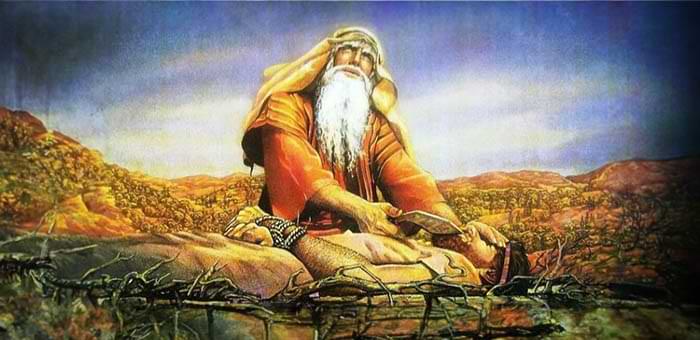
The blood of those who refused to give in to fear or abandon their confession has been used to saturate the Church in every age. Nigeria has not been exempt from such a costly legacy, particularly in the northern part of the country. The heavens refer to them as martyrs—men, women, and children who choose faith over fear, light over darkness, and eternal over temporary safety—while others may label them insurgent victims. Like Abel's blood, there’s still cries—not for vengeance, but for justice, revival, and remembrance. Leah Sharibu's story is not unique; it is only one of many that have blazed throughout Northern Nigeria. From Jos to Kaduna, from Chibok to Borno, Christians have seen waves of violence aimed at erasing their presence, silencing their testimony, and using terror to coerce conversion. The Church hasn't disappeared, though. Rather, like a storm-beaten oak tree, it has remained rooted and thriving despite its scars.
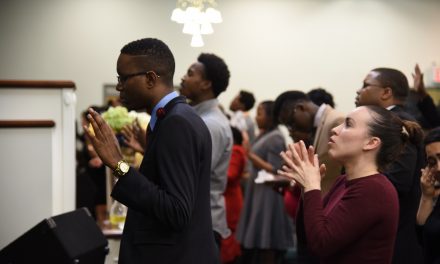
In June 2022, a terrible slaughter occurred in the St. Francis Catholic Church in Owo, Ondo State. Gunmen broke into the sanctuary on a Sunday morning, the type of morning when praise hymns were heard everywhere. In an instant, a parade of saints entered heaven, and devotion blended with blood. The media referred to it as carnage, the government as terrorism, but the Church recognized it for what it was: a fight against the faith. As they worshipped, those Christians died. Their death was a testament, not a failure. Numerous lay Christians, pastors, and missionaries have suffered the ultimate cost farther north. When Rev. Lawan Andimi, a pastor of the Church of the Brethren, was kidnapped by Boko Haram in January 2020, he became a symbol of unshakable faith. "By the grace of God, I will be with my wife, my children, and my colleagues," he said calmly in a video that his kidnappers shared. If not, that is God's will. God is to be praised. He was executed a few days later. He may have pleaded. Christ may have been denied by him. He decided to forgo compromise in favor of eternity. In the Christian heartland of Nigeria, his parting remarks continue to reverberate as an exhortation to bravery.
Then there are the anonymous, those who didn't ever make a social media trend. The pastors who stayed behind when others fled, tending to their flocks in the shadow of death; the mothers who refused to leave their villages and instead chose to protect their local chapels; the fathers who risked death by hiding Bibles under their roofs; the teenagers who were pulled from classrooms for wearing crosses. Heaven recalls their sacrifices even when the world does not, and they are the invisible Church, the quiet heroes."They burned our church and took away our pastor," a survivor of the Gwoza crisis in Borno once told a missionary delegation. “With just our children, we dashed into the bush. We prayed beneath the stars every night. I believed we were done. However, I saw a vision of Jesus standing among us as I closed my eyes. I realized then that He was present despite the fire.” Her statements are consistent with Isaiah 43:2, which states that "you shall not be burned, nor shall the flame scorch you, when you walk through the fire."
These stories may seem heartbreaking, but they show the Nigerian Church's unwavering spirit. Similar to the early Christians who had to deal with lions in Rome, our brethren have been subjected to beheadings, gunfire, and explosives, but they have never been without hope. They are a real example of how faith grows rather than dies in the face of suffering. A new church appears in a refugee camp for each one that is destroyed. Ten new pastors are raised with fresh fervor for every pastor killed. So, the issue is: What keeps them going? Why do believers continue to sing as all around them burns? The solution is straightforward and holy—it is Christ's own revelation. They have discovered a monarchy that no uprising can topple, riches that no terrorist can take. Their tenacity stems from spiritual certainty rather than human bravery. According to the apostle Paul, "We are persecuted but not abandoned; struck down but not destroyed; perplexed but not in despair; hard-pressed on all sides, yet not crushed." Corinthians 4:8–9.
We are reminded by these religious figures that Christianity was never intended to be a convenient religion. A covenant of surrender is what it is. Their blood implores the slumbering Church to remember, to pray, and to live with holy haste. In the face of compromise, we who live in peace must cling to holiness if they can cling to Christ in the face of death. The Nigerian martyrs have just crossed the finish line; they are not dead. Their stories are sermons, their testimonies are seeds. A potent truth is revealed in their ashes: the Church is unkillable. Faith cannot be silenced by persecution, but bodies may. The Church will be strengthened and purified by the same fire that attempted to burn them until the day when, as Revelation 7:9 states, "a great multitude from every nation, tribe, people, and language" comes before the Lamb wearing white garments, including the religious heroes of Nigeria. They don't squander their blood. It is the ink being used to write the next chapter of resurrection.










Recent Comments